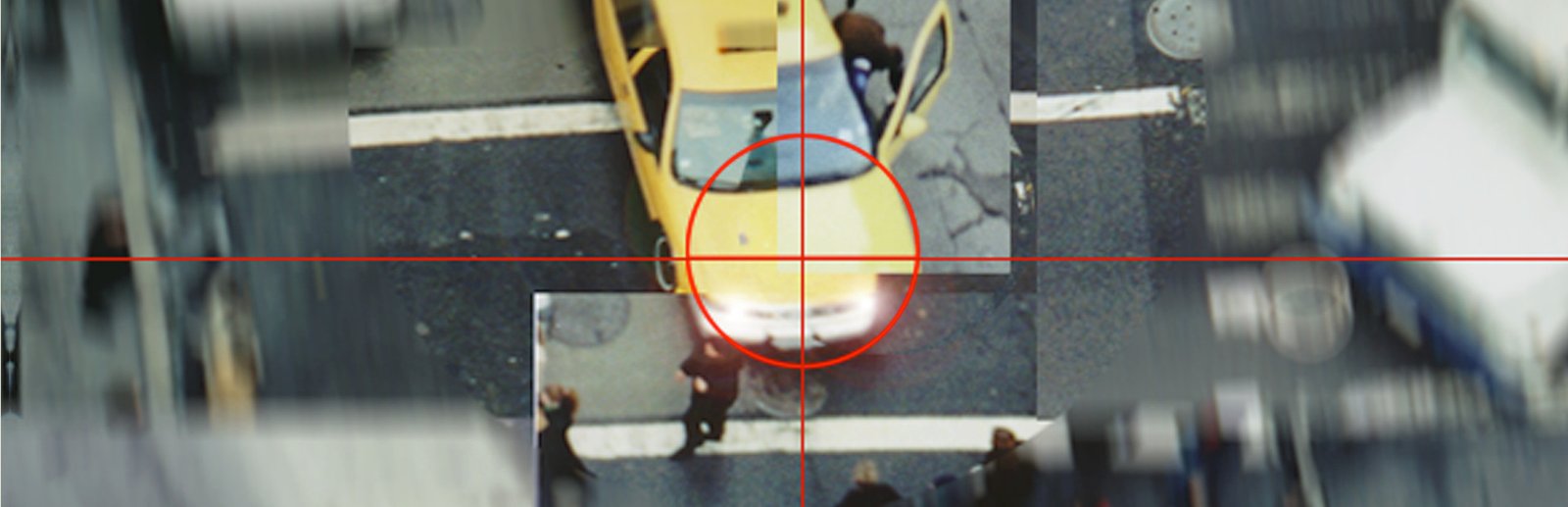
Before it was about organized crime, open worlds, and controversies that made international headlines, the first Grand Theft Auto almost didn’t exist at all — the project was repeatedly halted during development, nearly cancelled by its own publisher, and one of the things that saved it was, according to the team itself, a bug.
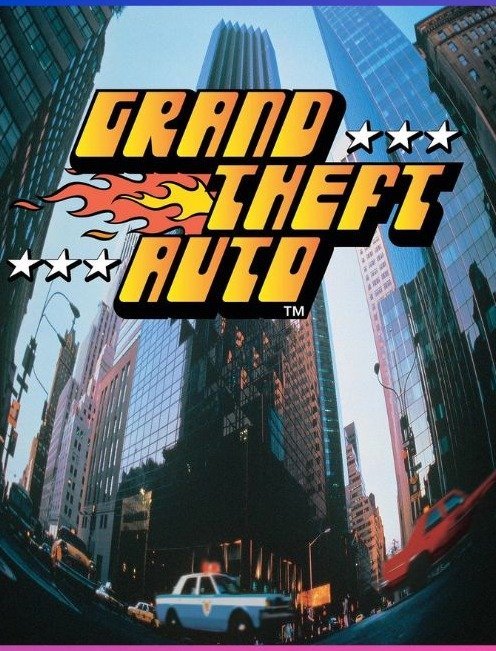
Original box art for Grand Theft Auto (1997). Image: BMG Interactive / Take-Two Interactive.
From Lemmings to Race’n’Chase
DMA Design was founded in 1988 in Dundee, Scotland, by David Jones. Before GTA, the studio was already known for Lemmings (1991), one of the biggest puzzle-game hits of its era. Development of what would become Grand Theft Auto officially began on 4 April 1995, under the name Race’n’Chase — a top-down car-chase game where the player controlled a police officer hunting criminals.
According to Gary Penn, DMA’s creative director at the time, in an interview with Gamasutra (now Game Developer), the team had several references in mind — Elite, Frontier, Syndicate, Mercenary — but the “be the cop” concept simply wasn’t engaging:
“The game was cops and robbers, which evolved fairly quickly — nobody wants to be the cop, it’s more fun to be bad. And then that evolved into Grand Theft Auto.”
— Gary Penn, DMA Design’s creative director
Producer David Jones also cited Pac-Man as a direct influence on the run-from-the-police dynamic.
- 4 years of development
None of the planned milestones were met on schedule — from the design (targeted for May 1995) to final production (targeted for July 1996), everything ran late.
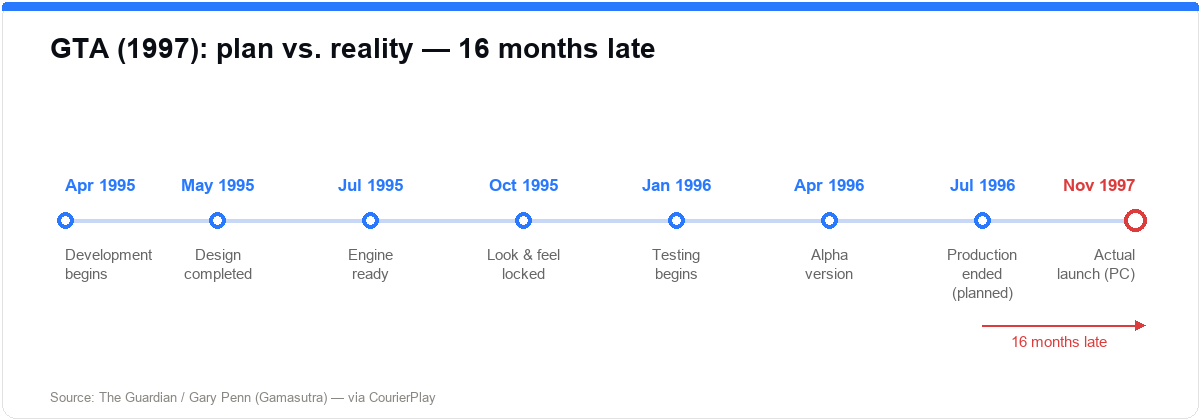
From the start of development to launch: 16 months behind plan.
Nearly Cancelled for Crashing Constantly
The game came close to being cancelled for real — and not because of any controversy. According to Gary Penn, the publisher itself, BMG Interactive, wanted to can the project because it didn’t seem to be going anywhere. The two biggest technical problems: the game crashed constantly, which meant the team itself couldn’t properly test what they were building, and the car handling was, in Penn’s own words, “appalling.” Until that got fixed, the project wasn’t moving forward.
The game was also planned for Sega Saturn and Nintendo 64 at one point, platforms it never actually shipped on. The original design document, dated 22 March 1995 and credited to Keith R. Hamilton (the project’s director/programmer), only became public in 2011, when former developer Mike Dailly posted it online himself.
The Bug That Saved the Game
With the core of the game finally more stable, another problem remained: the police were boring to deal with. That’s when what Gary Penn describes as the turning point happened. A routing error in the police cars’ AI made them start behaving unpredictably — instead of just chasing the player at a safe distance, police cars began trying to drive straight through the player, ramming them on purpose.
“I think it was a bug — the police suddenly became mental and aggressive. […] That was an awesome moment — suddenly there was real drama: ‘Oh my God, the police are psycho, they’re trying to ram me off the road.’ That was awesome, so that stayed in.”
— Gary Penn, DMA Design’s creative director
According to him, that technical accident turned the game — until then seen as “just another mess” — into something the team itself realized actually had potential.
The Controversy Started Before Launch — Even in the UK Parliament
Grand Theft Auto became a subject of official debate even before it hit store shelves. On 20 May 1997 — months before release — a member of the House of Lords formally questioned the British government about the game, describing it as a title involving car theft, police chases, and hit-and-run accidents, and asking whether anything would stop children from buying it freely. The Home Office responded that the game would still go through mandatory classification by the BBFC (the UK’s game/film ratings board), and that a refusal to classify it would automatically make its sale illegal in the country. The publicist hired by the publisher, Max Clifford, leaned into that controversy as free publicity.
The game arrived on very different dates depending on platform and region: PC/Windows in Europe on 28 November 1997 (published by BMG Interactive), PlayStation in Europe on 12 December 1997. In North America, it didn’t arrive until March 1998 (PC, via ASC Games) and June 1998 (PlayStation, via Take-Two Interactive). The Game Boy Color version came last, in 1999.
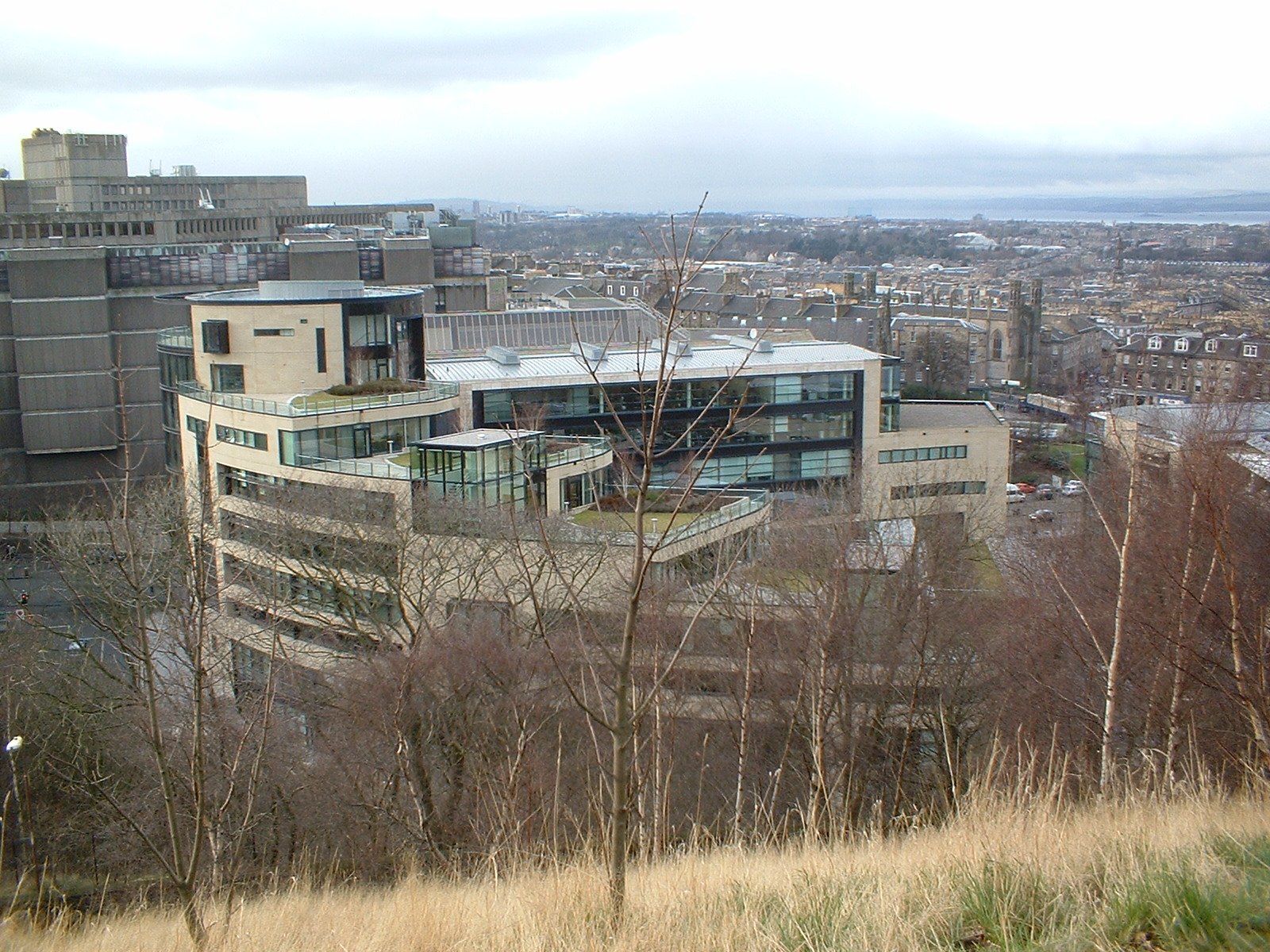
The former Rockstar North building in Edinburgh — the name DMA Design would adopt years later. Public domain.
Rockstar Didn’t Even Exist Yet
A detail that’s easy to miss: when the original GTA launched, Rockstar Games didn’t even exist. The label was only created in 1998 by Take-Two Interactive, after buying the franchise’s rights on the back of the first game’s commercial success. Only the belated Game Boy Color version, released in 1999, actually shipped with the Rockstar Games name on it.
Reception and Legacy
Critical reception at the time was mixed — graphics and controls took heat, but the game’s freedom and sound design were praised — yet commercial success was undeniable, and the game is now recognized as one of the most influential in gaming history. Two expansions set in 1960s London (London 1969 and London 1961) followed later in 1999, before the franchise made its leap to 3D with GTA III in 2001.
How sales grew over time
- November 1998: over 1 million units shipped to retailers (PC + PlayStation combined).
- Early 1999: “Gold” prize at the Milia festival in Cannes, for revenues above €17 million in the EU alone during 1998.
- May 1999: reached No. 2 on the UK charts (stayed in the top 20 for at least 76 straight weeks).
- October 1999: 3.5 million units sold.
- March 2001: 6 million units sold — shortly before GTA III redefined the franchise for good.
On development cost: there’s no reliable, verifiable record of what the game cost to make — the only claims we found came from posts with no primary sourcing, including one with an incorrect date for Take-Two’s acquisition of DMA Design (it said 1998; the correct year, confirmed by more than one source, is 1999). We chose not to publish a number we couldn’t verify.
A Relic That’s Hard to Play Today
And if you want to relive this history by actually playing it: it’s not that simple. The original GTA isn’t sold on Steam or GOG. Rockstar itself once offered the game for free through “Rockstar Classics” (alongside GTA II), but sources disagree on whether that download is still up. In practice, there’s no easy, official way to buy and play the classic today.
Trivia and Lesser-Known Facts
- In an interview with Next Generation magazine (April 1997 issue), project director Keith Hamilton admitted the struggles while development was still ongoing: “GTA was harder than we thought. We’re rewriting the handling of the cars at the moment. We’ve got the time to change the graphics to 24-bit.”
- The original design document (version 1.05) recorded meeting notes dating back to 23 January 1995 — before the official development start date. The game’s intro, per that document, was originally planned as a pre-rendered animated cutscene.
- The PlayStation version wasn’t made by DMA Design itself — it was handled by a different studio, Visual Sciences, using their own “ViSOS” framework.
- The DOS version was built with Watcom C/C++ v10 and Microsoft MASM 6.1; the Windows version with Visual C++ v2.0 — typical PC development tools of the mid-1990s.
Sources: Game Developer/Gamasutra (original Gary Penn interview), Hansard — UK House of Lords (20 May 1997), Wikipedia